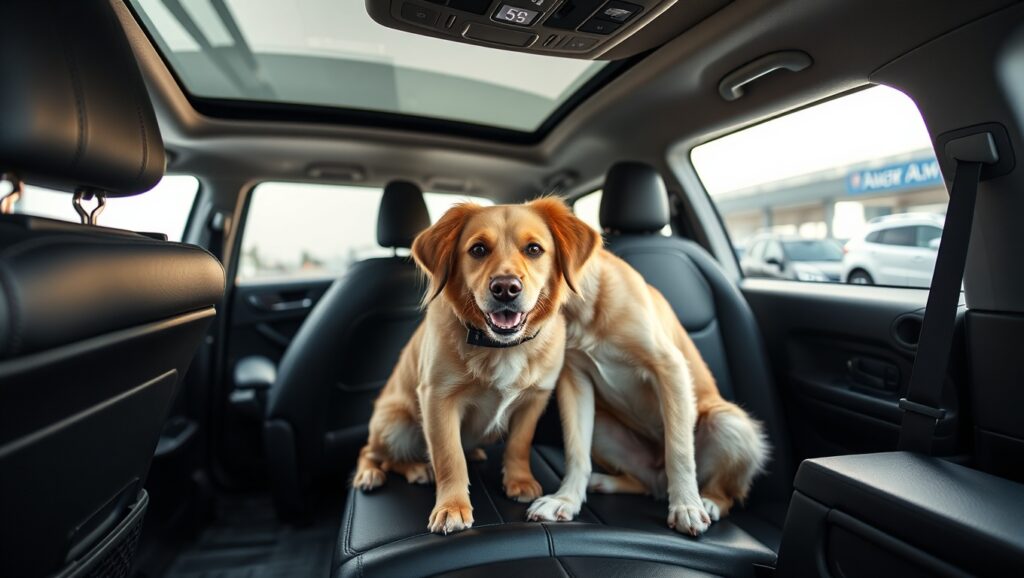
Pet travel services in San Diego help pet owners safely transport animals across the San Diego-Tijuana border with proper planning, current health documents, and appropriate carriers. Most pets can safely cross into Mexico with a health certificate from a licensed veterinarian, a current rabies vaccination, and a microchip or ID tag. The process takes 2 to 4 weeks of preparation and costs between
Traveling with your pet across the San Diego-Tijuana border requires proper planning, current health documents, and the right carrier or transportation setup. Most pets can safely cross into Mexico with a health certificate from a licensed veterinarian, a current rabies vaccination, and a microchip or ID tag. The process takes 2 to 4 weeks of preparation, costs between $150 and $400 in documentation fees, and demands attention to Mexican import rules that change seasonally. This guide covers everything you need to know about pet travel services in San Diego and how to move your dog, cat, or small animal safely across the border.
50 and $400 in documentation fees.
The San Diego-Tijuana border is the busiest land crossing in North America. Pet owners moving between California and Baja California face strict rules from both countries. One mistake—a missing signature, an expired vaccine, or a damaged health certificate—can delay your crossing by hours or result in your pet being denied entry.
Professional pet travel services handle the stress for you. They know the current Mexican veterinary board rules, understand which documents CBX Pet Care and other concierge providers accept, and have relationships with border officers at the San Ysidro and Otay Mesa crossings. They also understand seasonal changes: spring and fall crossings are faster, while summer heat requires extra hydration planning and early morning travel.
A reliable pet travel service costs $200 to $600 depending on whether they arrange transport, obtain documents, or manage the entire move. For many San Diego pet owners—especially those relocating to Tijuana or Rosarito—this investment saves days of stress and potential fines.
Your pet’s health certificate is the most important document. Mexican customs requires a Certificate of Health (Certificado de Salud) signed by a USDA-accredited veterinarian within 10 days of travel. This is not the same as a routine wellness exam.
Here’s what the certificate must include:
Many San Diego vets offer this service for $50 to $150. However, not all clinics are USDA-accredited—CBX Pet Care can connect you with certified providers in Mission Valley, Old Town, and La Jolla. Mexican customs may also ask for proof of other vaccinations like distemper, parvovirus, or DHPP. Check with your destination city in Mexico, as rules vary between Tijuana, Ensenada, and Puerto Vallarta.
You’ll also need proof of ownership—a copy of your pet’s microchip registration, adoption papers, or purchase receipt. Bring this in both English and Spanish if possible.
Your carrier is your pet’s safety zone during border crossing and travel. Choose based on your pet’s size, temperament, and the length of your journey.
For dogs under 20 pounds: Use a soft-sided airline-approved carrier or a hard-plastic crate. These fit in vehicle backseats and reduce stress during the 20-minute to 1-hour border wait. Carriers like Petmate Sky Kennel or Sherpa bags cost $60 to $200 and meet both US and Mexican airline standards.
For dogs 20 to 60 pounds: A vehicle travel crate or barrier is safer than a carrier. These bolt into your backseat or truck bed and let your dog shift weight during driving. They cost $150 to $400 and reduce the risk of injury if you brake suddenly near the border checkpoint.
For cats: A small hard-sided airline crate is best. Cats stress easily in unfamiliar carriers, so get yours acclimated 2 to 3 weeks before travel by leaving the carrier open with treats inside. Line it with a blanket that smells like home.
For rabbits, ferrets, and small pets: Use a well-ventilated carrier with absorbent bedding and a water bowl. Small animals overheat quickly in direct sun—never leave them in a parked car, even cracked windows are unsafe near the Tijuana border in summer.
Pack a travel kit for your pet: collapsible food and water bowls, 3 to 5 days of regular food (not new brands—intestinal upset is common during travel), medications in labeled bottles, and waste bags or litter pads. Mexican veterinarians can treat upset stomachs, but prevention is easier at the border.
Border crossing is stressful for pets. Preparation reduces anxiety and prevents medical emergencies mid-journey.
4 to 6 weeks before travel: Schedule a health checkup with your vet. Discuss your travel plans and ask whether your pet is fit for cross-border movement. Pets with heart conditions, respiratory disease, or anxiety may need sedation clearance or special crating. Get your rabies vaccination done now—recall, Mexican customs requires it to be current before travel, not after.
3 weeks before: Ensure your pet’s microchip is registered with your Tijuana or San Diego address. Update contact information in the microchip database. This takes 10 minutes online but is crucial if your pet escapes during the crossing or afterward.
2 weeks before: Visit your USDA-accredited vet for the health certificate. Bring proof of rabies vaccination, proof of ownership, and any records of other recent vaccinations. The vet will physically examine your pet and fill out the certificate. If your pet has behavioral issues—aggression, excessive barking, fear biting—mention this now. Some vets recommend calming supplements (like L-theanine) starting 1 week before travel.
1 week before: Practice traveling in your carrier or crate. Take short car rides to get your pet used to movement and the car environment. Practice at different times of day.
Day before: Reduce food intake slightly (a light meal 6 hours before crossing). This prevents nausea and accidents in the carrier. Fresh water is fine anytime. Don’t change your pet’s routine—consistency reduces stress.
Day of travel: Leave early. Border waits are shortest between 6 and 8 a.m. Pack your documents in a clear folder (not a backpack—officers want easy access). Have your pet on a short leash or secured in the crate before you approach the checkpoint.
CBX Pet Care arranges all documentation and transportation logistics
Mexico’s veterinary regulations are stricter than many people expect. The rules also differ by state. Tijuana and Baja California Norte have specific requirements that don’t apply in Jalisco or Yucatán.
Banned breeds in Mexico: Mexico does not have a federal banned breed list, but some municipalities restrict pit bulls, Rottweilers, and Akitas. Tijuana generally allows these breeds with proper documentation, but smaller towns near Rosarito or Ensenada may not. Ask your vet or contact the local Secretaría de Agricultura (agriculture ministry) before bringing a restricted breed.
Microchip requirement: While not legally mandatory, Mexican customs increasingly requires or prefers microchips for dogs and cats. If your pet doesn’t have one, get one implanted 2 to 3 weeks before travel (the microchip should be fully settled and registered before border crossing).
Age restrictions: Puppies and kittens under 12 weeks should not cross the border. Their immune systems are still developing, and the stress of travel can trigger illness. Wait until they are 16 weeks old and have completed their primary vaccination series.
Duration of stay: If you’re visiting Mexico temporarily (less than 30 days), keep all documents with you. If you’re permanently relocating your pet, keep copies of everything and file them with your Mexican address. Some Baja California municipalities require pet registration—ask when you arrive.
Returning to the US: Bringing a Mexican pet back into California is harder than taking a US pet to Mexico. The USDA requires a health certificate, proof of rabies vaccination within 1 year, and a veterinary health check within 10 days of entry. Some pets also require serological testing (blood work) to prove rabies antibodies. Budget an extra $200 to $300 and 4 to 6 weeks for the return journey.
San Diego has two major pet-friendly border crossings: San Ysidro and Otay Mesa. Both accept pets, but crossing times and procedures differ slightly.
San Ysidro Crossing (I-5): This is the busiest crossing in the world. Expect 30 minutes to 2 hours depending on time of day. It’s busiest between 7 a.m. and 9 a.m. (commuters) and 4 p.m. and 7 p.m. (evening return traffic). Best times to cross with pets: 10 a.m. to 3 p.m. on weekdays (Tuesday to Thursday). The San Ysidro port has dedicated pet lanes—ask the officer directing traffic where to line up. Most animals do fine here because the wait is short.
Otay Mesa Crossing (State Route 905): This crossing is less crowded and often faster. Waits are typically 15 to 45 minutes. It’s better for pets that get anxious during long car idle time. Otay Mesa is about 15 minutes from South San Diego or Chula Vista. If you live in East County (El Cajon, Ramona, Julian), this route saves you 30 minutes of driving.
Port of Entry procedures: Both crossings have the same basic pet check. An officer or veterinary inspector will ask to see your health certificate, rabies vaccination proof, and ID. They may look at your pet but rarely conduct a full physical exam at the border. Keep documents in a clear folder on your passenger seat for quick access. Have your ID and the pet’s documents ready as you approach the booth.
Summer crossing tips: Temperatures in San Diego reach 75 to 85 degrees Fahrenheit during the day, and Tijuana can be hotter. Never leave your pet in a parked car while waiting. If your wait exceeds 30 minutes, move your car periodically to keep air conditioning running. Bring a portable water bowl and offer water every 15 minutes. Dogs can suffer heatstroke in just 20 minutes on a warm day.
Winter crossing tips: January and February are mild in San Diego (60 to 70 degrees Fahrenheit), making them ideal months for pet travel. Rainfall is possible, so waterproof your documents and have towels in the car to dry off your pet if needed.
Even experienced pet owners make costly mistakes at the border. Here’s what to avoid:
Mistake 1: Expired rabies vaccination. Mexican customs checks the vaccination date on your certificate. If it says “expires 2026” and you’re crossing in 2026, you’ll be turned back. Rabies vaccines last 1 year (most vets give 1-year vaccines) or 3 years (premium vaccines, cost extra but last longer). Get your booster 6 weeks before travel.
Mistake 2: Traveling with multiple pets without prepared crates. If you have two dogs or a dog and a cat, bring separate carriers. Mixing unfamiliar animals in one crate causes fighting, injury, and stress. Cost is $60 to $200 per carrier—well worth the safety and sanity.
Mistake 3: Not registering your microchip before crossing. A microchip is useless if it’s not registered. Mexican shelters and vets can scan it, but they can’t reach you if your info isn’t in the database. Register before you cross. Update it again once you settle in Mexico.
Mistake 4: Bringing the wrong food. If your pet is on prescription or specialty food, bring enough for the entire trip plus 1 week extra. Mexican pet stores carry Purina and Royal Canin, but specialty diets (raw, limited ingredient, prescription) are hard to find in Tijuana and cost 40% more. Ship food ahead or bring it with you.
Mistake 5: Traveling on a full stomach. A pet with a belly full of food is a pet that gets nauseous and accidents. Feed your pet 6 to 8 hours before border crossing. A small treat 1 hour before is fine, but nothing substantial.
Mistake 6: Not having a backup plan if your pet gets sick at the border. Border delays happen. If your pet shows signs of distress—excessive panting, drooling, or vomiting—you may need emergency care. Know the nearest vet clinic on both sides of the border. In San Ysidro area, Banfield Pet Hospital (San Diego) is 5 minutes away. In Tijuana, Hospital Veterinario San Lucas (near the border) can handle emergencies in minutes.
Not every pet owner needs a professional service, but certain situations make it worth the cost.
You should hire a pet travel service if:
You can DIY pet travel if:
Professional pet travel services in San Diego charge $300 to $800 per pet for a full package (health certificate, crate preparation, border crossing assistance). CBX Pet Care and similar concierge services coordinate everything so you focus on packing your own belongings.
Crossing the border is just the first step. Your pet needs adjustment time in the new environment.
First 24 to 48 hours: Keep your pet in a quiet room with familiar items (bedding, toys, scent). Don’t overwhelm it with new spaces or people. Offer water and small meals. Some pets don’t eat for 24 hours after travel—this is normal. Offer food again in 12 hours.
First week: Stick to the same feeding schedule, walk times, and play routine as before. Routine reduces stress and helps your pet adjust. Take your pet outside frequently to acclimate to new bathroom spots.
Finding a vet in Mexico: If you’re staying in Tijuana, register with a local vet within the first week. Reputable clinics near the border include Hospital Veterinario San Lucas (Tijuana) and Clínica Veterinaria del Puerto (Rosarito). Keep your pet’s health certificate and vaccination records. Mexican vets will want to see them and may do a new examination to establish a client relationship. Costs for routine exams are $25 to $50—cheaper than San Diego but quality varies.
Updating ID and registration: If you’re permanently moving to Mexico, update your microchip registration with your new address and phone number. Also update your pet’s ID tag to include a Mexico phone number. In Tijuana, local pet registrations are optional but recommended—contact the municipal Secretaría de Salud office for details.
Technically yes, but Mexican customs increasingly prefers or requires microchips. If your pet doesn’t have one, get it implanted 2 to 3 weeks before travel. Without a microchip, your pet has no permanent ID if it escapes. Microchipping costs $50 to $100 at San Diego vets.
A health certificate is valid for 10 days from the date issued. Don’t get it more than 10 days before you cross. Mexican customs will reject an older certificate. Plan your vet visit 3 to 5 days before travel to ensure freshness.
Mexican customs will turn you back. Your pet cannot enter Mexico without proof of current rabies vaccination. You’ll have to return to California, get the vaccination, wait 7 to 10 days, and try again. Plan ahead to avoid this.
There are no commercial flights between San Diego and Tijuana—the distance is only 20 miles. Driving is the only practical option. Some pet shipping companies offer air transport to other Mexican cities like Mexico City or Puerto Vallarta, but this costs $1,000 to $3,000 and requires the same border documentation.
Pet insurance in Mexico is rare and expensive. Most US-based pet insurance (like Trupanion or Petplan) doesn’t cover cross-border travel. Ask your insurance provider about coverage in Mexico. Otherwise, budget $200 to $500 for emergency vet care just in case.
Crossing the San Diego-Tijuana border with your pet is manageable if you plan ahead. The process takes 4 to 6 weeks of preparation, costs $150 to $600 in documentation and travel services, and requires attention to Mexican import rules. CBX Pet Care and other pet concierge services can handle much of the logistics, but understanding the basics protects your pet and speeds up the crossing.
Start by scheduling a vet checkup 4 to 6 weeks before your planned travel. Get your rabies vaccination updated, microchip registered, and health certificate ready. Choose the right carrier, pack wisely, and cross during the least busy times (10 a.m. to 3 p.m. on weekdays). Your pet will adapt to Mexico just as it adapted to San Diego—with patience, routine, and care.
Let our team handle documentation, transport coordination, and all the details
619-914-2990 Related: Pet Transportation Near Me: How to Find Reliable Pet Transport in the San Diego-Tijuana Area Related: Pet Transportation Services San Diego: Cross-Border Pet Care Made Easy Related: Cross Border Pet Care: San Diego, California, United States Guide 2026 Related: Pet Transportation San Diego: What to Expect When Moving Your Pet Across International Borders
Our bilingual team is ready to help. Get a free estimate for veterinary care in Tijuana.
